
Table of Contents
ToggleUS Budget Deficit Nears $2 Trillion as Debt Interest Costs Surpass Defense Spending
The US budget deficit has moved closer to the $2 trillion mark, highlighting the growing financial pressure facing the federal government as the 2026 fiscal year approaches its end. The federal deficit reached approximately $1.97 trillion during the first 11 months of fiscal year 2026, according to the latest budget data.
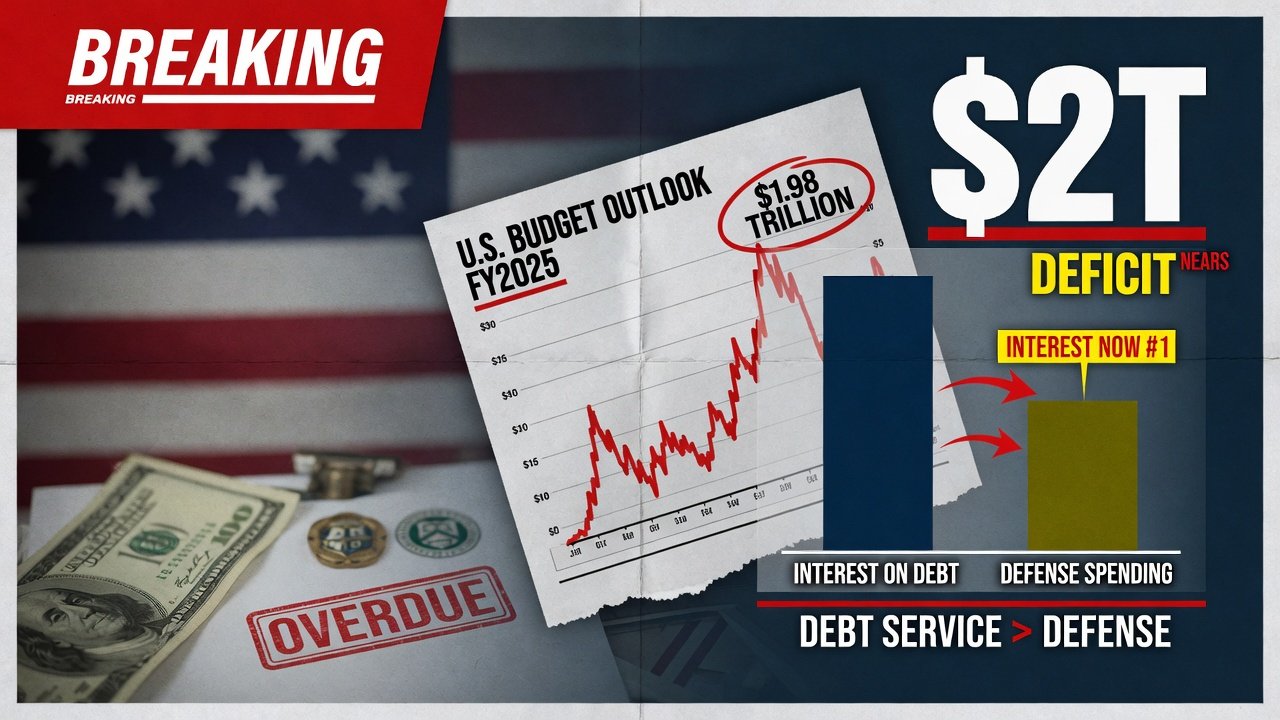
With only one month remaining in the fiscal year, the size of the shortfall is raising fresh concerns about the sustainability of US government borrowing. The situation is particularly significant because the government is now spending more on interest associated with its debt than on national defense, underscoring how borrowing costs have become a major part of the federal budget.
US Federal Deficit Reaches $1.97 Trillion
The latest figures show that the federal government accumulated a deficit of about $1.97 trillion through August, the 11th month of fiscal year 2026. The fiscal year ends on September 30.
The Congressional Budget Office estimated the first-11-month deficit at roughly $2.0 trillion, while Reuters reported the Treasury’s year-to-date figure at approximately $1.97 trillion.
The deficit is already larger than the full-year shortfall recorded in fiscal 2025. According to Reuters, the FY2025 deficit was approximately $1.775 trillion, meaning the government has exceeded that amount before the current fiscal year has even ended.
The August deficit itself was approximately $167 billion. However, the monthly number was affected by the calendar because certain benefit payments that would normally have been recorded in August were shifted into July when August 1 fell on a Saturday.
Why Is the US Deficit Growing?
A federal budget deficit occurs when the government spends more money than it collects through taxes and other revenues.
The growing US deficit reflects a combination of increasing government spending, mandatory programs and the rising cost of servicing federal debt.
The Congressional Budget Office’s 2026 outlook projected federal outlays at approximately $7.4 trillion, compared with revenues of about $5.6 trillion. The resulting projected full-year deficit was around $1.9 trillion, although more recent data indicate the final figure could be higher.
Mandatory spending remains one of the biggest contributors to the increase in federal expenditures. Social Security, Medicare, Medicaid, veterans’ benefits and other programs account for substantial portions of government spending.
At the same time, the government must continue making interest payments on the enormous stock of federal debt.
Interest Costs Become a Major Budget Burden
One of the most important developments in the current fiscal picture is the rapid increase in federal interest costs.
CBO projected that net interest outlays would exceed $1 trillion in fiscal 2026, up from approximately $970 billion in 2025. That represents an increase of roughly $69 billion, or 7%, in a single year.
The increase is largely connected to the amount of debt outstanding and the interest rates the government must pay when borrowing and refinancing existing obligations.
As older Treasury securities mature, they must be refinanced at prevailing market rates. When interest rates remain elevated, the cost of servicing that debt can rise significantly.
This creates a difficult cycle: larger deficits require more borrowing, higher debt creates larger interest obligations, and those interest payments themselves contribute to future deficits.
Interest Spending Surpasses Defense Spending
The most striking feature of the current fiscal situation is that annual federal interest costs have moved above national defense spending.
The Committee for a Responsible Federal Budget noted that the United States is now spending more on yearly interest costs than on national defense.
This comparison is important because defense has historically represented one of the largest areas of federal discretionary spending.
CBO’s earlier 2026 baseline projected approximately $898 billion in defense funding for the year, while net interest costs were expected to reach more than $1 trillion.
The shift demonstrates how debt servicing is increasingly competing with traditional government priorities for federal resources.
National Debt Has Become a Growing Concern
The deficit represents the government’s annual borrowing requirement, while the national debt represents the accumulated amount the federal government owes.
The United States recently crossed the $40 trillion gross national debt milestone, according to the Committee for a Responsible Federal Budget.
CBO has also warned about the long-term trajectory of federal debt. Its February 2026 projections showed debt held by the public rising from about 101% of GDP in 2026 to 120% of GDP by 2036 under its baseline assumptions.
That means the debt burden could continue growing faster than the economy unless fiscal policy changes.
What Happens When Interest Costs Keep Rising?
Higher interest spending can have consequences beyond the federal budget.
As more government revenue is directed toward debt servicing, fewer resources are available for infrastructure, defense, healthcare, education, tax relief and other priorities.
Large government borrowing can also put upward pressure on borrowing costs across the economy. CBO has warned that rising federal debt can increase borrowing costs and reduce private investment over time.
For consumers and businesses, elevated interest rates can translate into more expensive mortgages, business loans, automobile financing and other forms of credit.
The impact is not necessarily immediate or uniform, because economic growth, inflation, Federal Reserve policy and Treasury market conditions all influence borrowing costs.
One Month Remains in Fiscal 2026
The latest deficit figure comes with one important qualification: September is still left in the fiscal year.
The United States therefore has another month of government revenue and spending before the final fiscal 2026 deficit is known.
CBO’s September 9 budget review estimated that the deficit had reached approximately $2.0 trillion through the first 11 months.
The final number could therefore move further above the $2 trillion threshold once September’s receipts and expenditures are included.
CBO had previously projected a full-year 2026 deficit of about $1.9 trillion, but that estimate was published before the latest monthly data became available.
Why the $2 Trillion Threshold Matters
A federal deficit approaching or exceeding $2 trillion is significant because it demonstrates the scale of the imbalance between government revenues and expenditures.
The concern is not simply the size of one year’s deficit. The bigger issue is whether large deficits become a persistent feature of federal finances.
If deficits remain elevated for many years, the government has to continue issuing debt. That increases the amount of debt on which future interest payments must be made.
CBO’s long-term projections show net interest costs continuing to rise substantially, potentially reaching about $2.1 trillion annually by 2036 under its baseline.
What Could Reduce the US Budget Deficit?
Reducing the deficit would generally require some combination of higher revenues, slower spending growth or faster economic growth.
Potential approaches include reforms to major entitlement programs, changes to tax policy, reductions in discretionary spending or policies designed to increase economic productivity and the tax base.
However, each option involves difficult political and economic trade-offs.
The challenge becomes even greater when interest costs continue increasing because policymakers have less flexibility to reduce the deficit without addressing debt-service expenses themselves.
The Bigger Fiscal Challenge for the United States
The US budget deficit nearing $2 trillion is more than a headline figure. It reflects a broader fiscal challenge involving rising mandatory spending, large borrowing requirements and rapidly growing interest costs.
The fact that annual interest expenses have surpassed defense spending adds another dimension to the issue. It means an increasing share of federal resources is being used simply to service existing debt rather than fund new government priorities.
With the 2026 fiscal year ending on September 30, attention will now turn to the final monthly budget figures and the full-year deficit.
The immediate milestone is the $2 trillion deficit. The longer-term question is whether the United States can slow the growth of debt and interest costs before they consume an even larger share of the federal budget.
Frequently Asked Questions
What is the US budget deficit in 2026?
The US federal budget deficit reached approximately $1.97 trillion during the first 11 months of fiscal year 2026, according to Treasury data reported by Reuters. CBO rounded the figure to approximately $2.0 trillion.
Why is the US federal deficit so high?
The deficit is being driven by a combination of government spending, mandatory programs and rising interest costs on federal debt. Social Security, Medicare and other major programs account for significant spending, while debt interest is becoming an increasingly large budget expense.
Has US interest spending surpassed defense spending?
Yes. The Committee for a Responsible Federal Budget said annual US interest costs have surpassed national defense spending. CBO’s 2026 projections also put net interest costs above $1 trillion compared with roughly $898 billion in projected defense funding.
How much is the US national debt?
The US gross national debt has recently surpassed $40 trillion, according to the Committee for a Responsible Federal Budget.
When does the US fiscal year end?
The US federal fiscal year ends on September 30. The latest $1.97 trillion deficit figure covers the first 11 months of fiscal year 2026, leaving September as the final month.
What could happen if US interest costs continue rising?
Higher interest costs could consume a growing share of federal resources, leaving less money available for other government priorities. Persistent high borrowing can also contribute to higher economy-wide borrowing costs and place additional pressure on future budgets.
