
That question has grown louder as the data tells a sobering story. Any early gains in manufacturing employment quickly faded, and the sector has been shedding jobs steadily since May. Since tariffs were announced in April, roughly 72,000 manufacturing positions have vanished, including about 8,000 losses in December alone.
So what’s really happening?
A Long-Running Decline, Not a Sudden Shock
Economists say the current downturn didn’t start with tariffs — and tariffs haven’t stopped it either. Gordon Hanson, an economist and professor of urban policy at Harvard’s Kennedy School, points out that manufacturing employment has been eroding for decades.
According to Hanson, the US has lost millions of manufacturing jobs since 1979 due to a mix of powerful forces: rapid automation, lingering effects of trade with China, and a lack of sustained national investment in rebuilding industrial strength. Tariffs, he argues, do little to address these structural challenges.
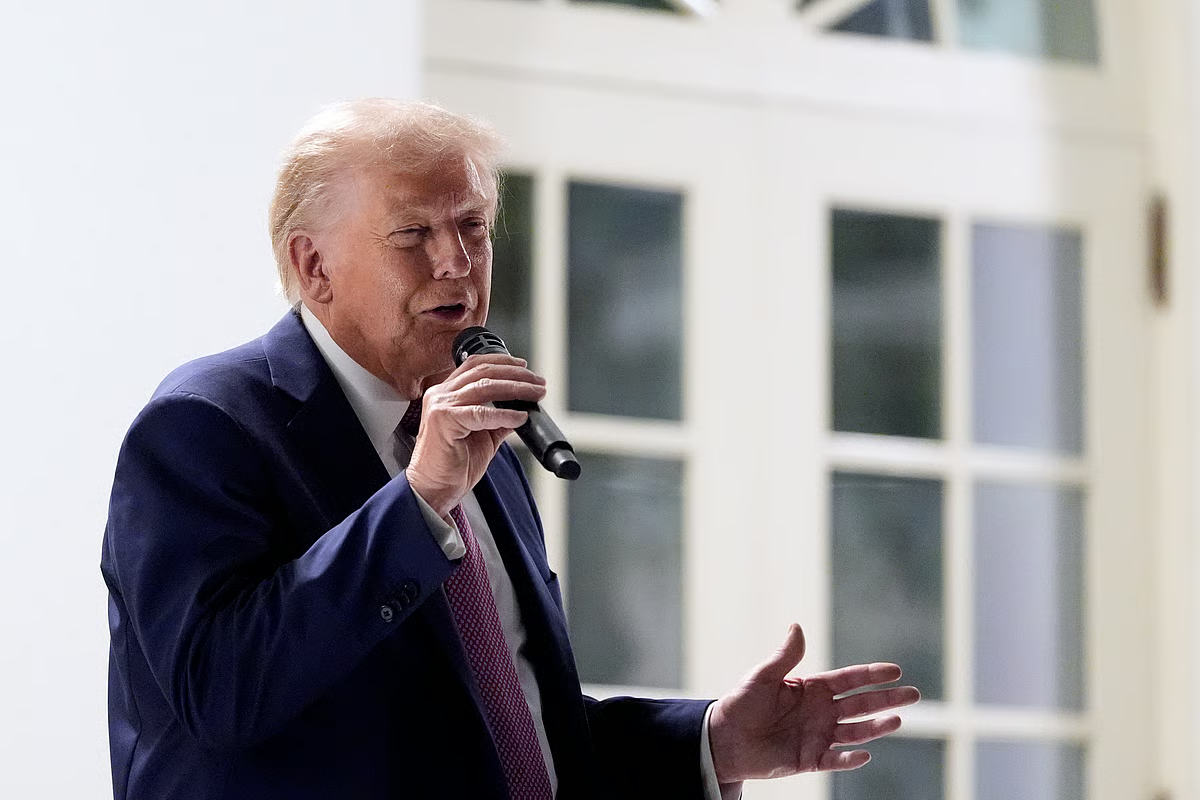
While former President Donald Trump insisted that import levies would send factories and jobs “roaring back” into the country, the reality has been far more complicated.
When Tariffs Raise Costs at Home
Tariffs can limit foreign competition, but they also raise costs for US manufacturers that rely on imported components. Many modern factories depend on global supply chains that simply don’t exist domestically.
Take electric vehicle production as an example. US plants often rely on batteries and rare earth materials sourced overseas. When tariffs drive up the cost of those imports, domestic manufacturers feel the squeeze — making expansion and hiring less attractive, not more.
For industries that largely left the US decades ago, such as apparel and textiles, the situation is even bleaker. As Hanson notes, many of those factories are simply gone, leaving little capacity to ramp up production or employment.
Manufacturing Isn’t Alone in Slowing Down
Manufacturing’s struggles are part of a broader hiring slowdown. Job growth across the economy has been weak, with most new positions concentrated in healthcare and social assistance. Outside of those areas, employers have largely hit pause.
That hesitation has been reinforced by policy uncertainty.
Uncertainty Makes Investment Risky
Frequent shifts in tariff policy have made it difficult for businesses to plan long-term investments. Dean Baker, senior economist at the Center for Economic and Policy Research, says the unpredictability is more damaging than the tariffs themselves.
Constantly changing rates and sudden trade threats — including short-lived tariff warnings against European nations — have injected volatility into markets and boardrooms alike. When companies don’t know what trade rules will look like next month, they’re far less likely to hire or invest today.
As Baker puts it, many firms have shelved expansion plans simply because they can’t be sure those plans will still make sense once policies change again.
The Data May Be Too Optimistic
Even the reported job numbers may understate the problem. Federal Reserve Chair Jerome Powell noted in December that official employment data may have overstated monthly job growth by around 60,000 positions.
While it’s impossible to say with certainty how many manufacturing jobs would exist without tariffs, economists agree on one point: there is no evidence that tariffs have triggered a meaningful jobs comeback.
Can Manufacturing Really Return?
The Biden administration also pointed to a manufacturing revival, but that rebound followed the massive job losses of 2020. While employment eventually surpassed pre-pandemic levels, growth lagged behind other sectors and varied widely by region, according to a 2024 analysis by the Economic Innovation Group.
Government spending initially fueled optimism. Manufacturing construction surged after the bipartisan infrastructure law, the CHIPS Act, and the Inflation Reduction Act. But that investment momentum slowed in 2025.
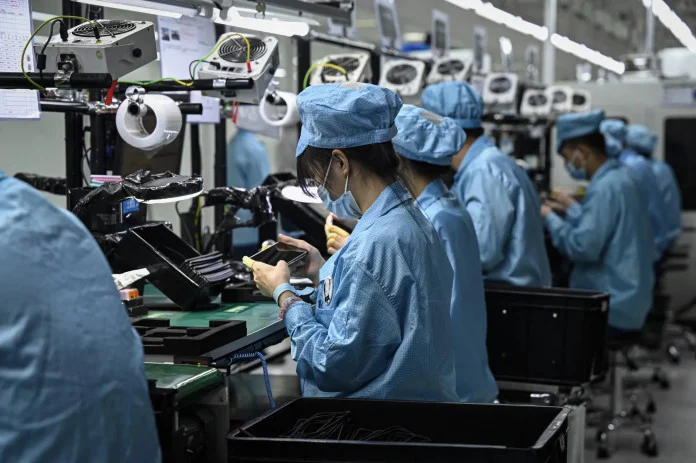
Even with aggressive policy support, experts say a true manufacturing employment boom is unlikely.
Robert Lawrence, a senior fellow at the Peterson Institute for International Economics, explains that manufacturing employment follows a predictable pattern in advanced economies. It rises during early development, then steadily declines — regardless of trade deficits or surpluses.
As consumers save money on cheaper goods, they tend to spend more on services, where job growth is stronger. That dynamic has played out clearly in the US, where recent payroll gains have been concentrated in healthcare, food services, and social assistance.
A Structural Shift That’s Hard to Reverse
“We’ve tried industrial policy. We’ve tried trade protection,” Lawrence says. Despite those efforts — even before Trump’s tariff initiatives — manufacturing employment has continued to shrink.
The takeaway is uncomfortable but clear: tariffs alone cannot reverse decades of economic transformation. Manufacturing hasn’t disappeared overnight, and it won’t come back overnight either. The forces reshaping the US labor market run deeper than trade policy — and they’re proving far harder to undo.
