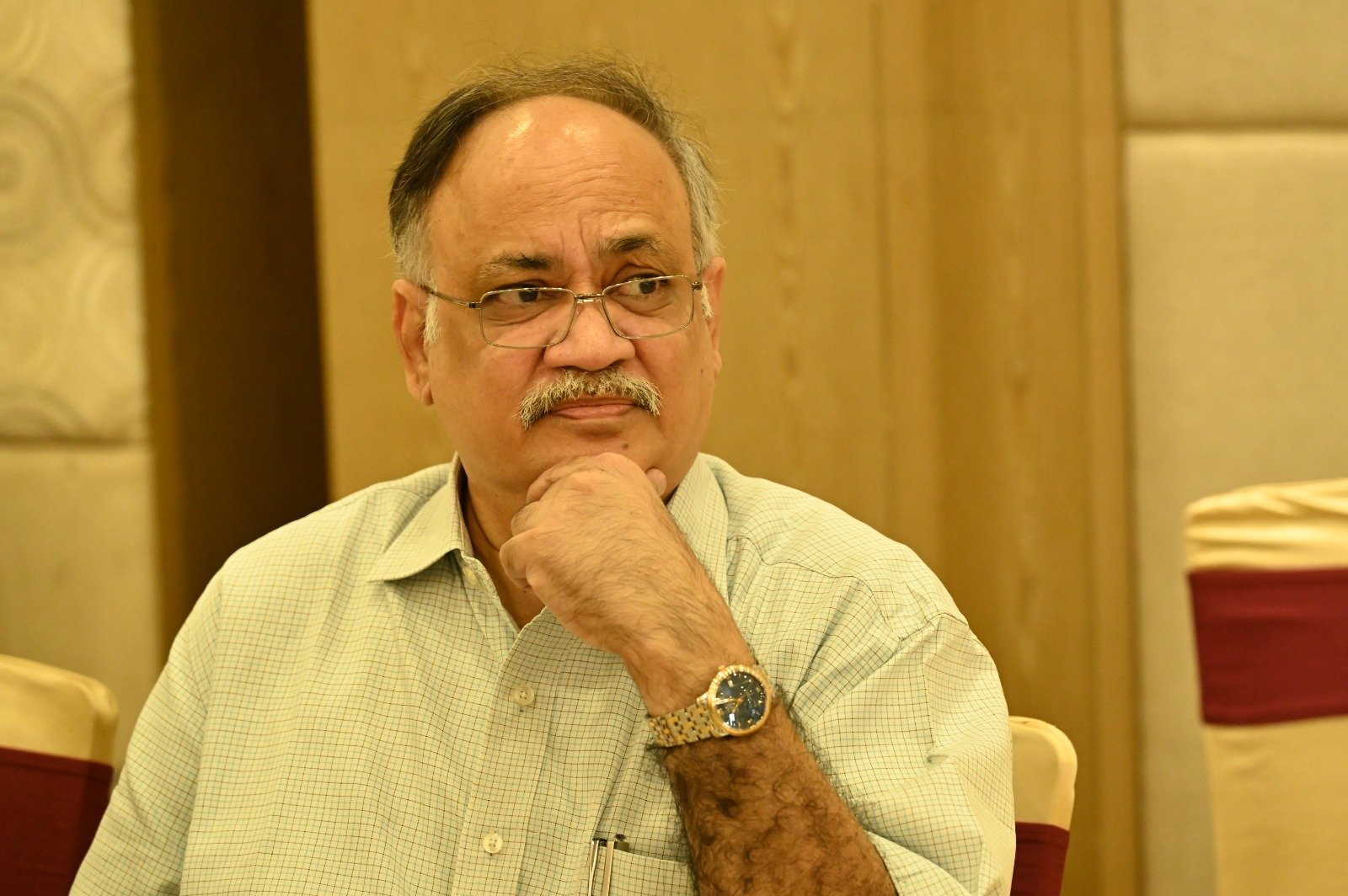
Written by Dr. Sakhamuru Srinivasa Prasad, Chief Editor Repatikosam Telugu Daily, Andhrapradesh.
In the realm of governance, politicians typically exhibit a penchant for immediate, reactionary measures when confronted with systemic challenges. This approach has been repeatedly demonstrated by governments and political parties alike. However, the political trajectory of Chandrababu Naidu, particularly following his assumption as Chief Minister in 1995, offers a compelling counter-narrative. An analytical review of his policy framework, spanning both his periods of executive authority and his intervals in the opposition, unveils a consistent commitment to strategic longitudinal planning. By championing pioneering initiatives such as “Vision 2020,” catalyzing the regional information technology revolution, and integrating nascent technologies like blockchain, Naidu has cultivated a reputation for avant-garde governance. His more recent introduction of “Vision 2047” further underscores a governance philosophy that is fundamentally progressive, transformative, and anchored in future-readiness.
In the contemporary political landscape, decision-making is frequently dictated by the exigencies of electoral cycles. Conversely, the career of Naidu is characterized by a conspicuous absence of such political expediency. His governance is defined not by the pursuit of immediate partisan advantage, but by a commitment to longitudinal societal impact and the welfare of future generations. Central to his philosophy is the identification of the structural determinants of systemic issues, followed by the implementation of enduring, foundational solutions.
It is within this framework of visionary governance that the P4 (Public-Private-People-Partnership) model was conceived. As a cornerstone of his mission to forge a poverty-free society, P4 represents a sophisticated policy intervention. Eradicating entrenched, generational poverty is a multifaceted challenge that demands unwavering commitment, ethical transparency, and institutional integrity. Naidu posits that poverty remains a primary inhibitor of state and national progress; without its resolution, the dividends of macroeconomic growth remain inaccessible to marginalized demographics.
Through the P4 initiative, a targeted effort was launched to eliminate poverty. At first glance, the initiative may appear modest. However, as its outcomes are realized, the broad and long-term impact of P4 becomes increasingly evident.
Poverty persists as a pervasive global pandemic. The perils of poverty manifest across diverse socio-economic landscapes equally, from the underdeveloped economy of Somalia to an economically powerful nation like the United States. It transcends the traditional boundaries of caste, religion, and geography, flourishing wherever structural inequities remain unaddressed. It is, in a sense, a pervasive malady; if eradicated on one side, paradoxically, it sprouts anew on another. The welfare measures deployed by successive governments to date have so far proven largely ineffectual. It is an open secret that these initiatives serve merely as ephemeral palliatives rather than enduring solutions. There is a conspicuous lack of evidence to suggest that any political entity has pursued the elevation of living standards or the liberation of the masses from the clutches of poverty with genuine sincerity of purpose. The prime reason is the exigencies of vote-bank politics. The marginalized continue to be sacrificed as an oblation in this selfish political ritual.
Recognizing poverty as the fundamental barrier to development, Chandrababu Naidu resolved to confront it systematically through a participatory framework. He maintains that the efficacy of any public policy is contingent upon sustained civic engagement. Guided by this principle, he developed the P4 framework. Within society, approximately ten percent of individuals hold extreme wealth, whereas twenty percent experience extreme deprivation. The P4 model was specifically designed to address the stark wealth disparity within society by synthesizing government support, private-sector engagement, and active citizen participation, while also introducing a vital human dimension to this economic reform.
Pioneered in Andhra Pradesh, the P4 initiative represents a global precedent in both scale and methodology. Paradoxically, this model offers limited traditional political mileage; by empowering the citizenry toward self-reliance, it narrows the scope for populist rhetoric and dependency-based welfare promises. This underscores Naidu’s “361-degree” leadership—a holistic perspective that prioritizes egalitarian outcomes over political gain.
The aspiration to build a poverty-free society is more than a policy goal; it is a foundational ideological commitment. Through P4, Naidu has established the scaffolding for one of the most ambitious social reform agendas in modern India. By systematically narrowing the chasm between the affluent and the impoverished, the P4 model fosters a more equitable society, transcending the divisive lines of caste and creed to ensure a dignified existence for all.