
Major Japanese banks plan to increase JGB purchases even as losses continue to grow, signalling a potential shift in strategy after years of scaling back exposure to government debt.
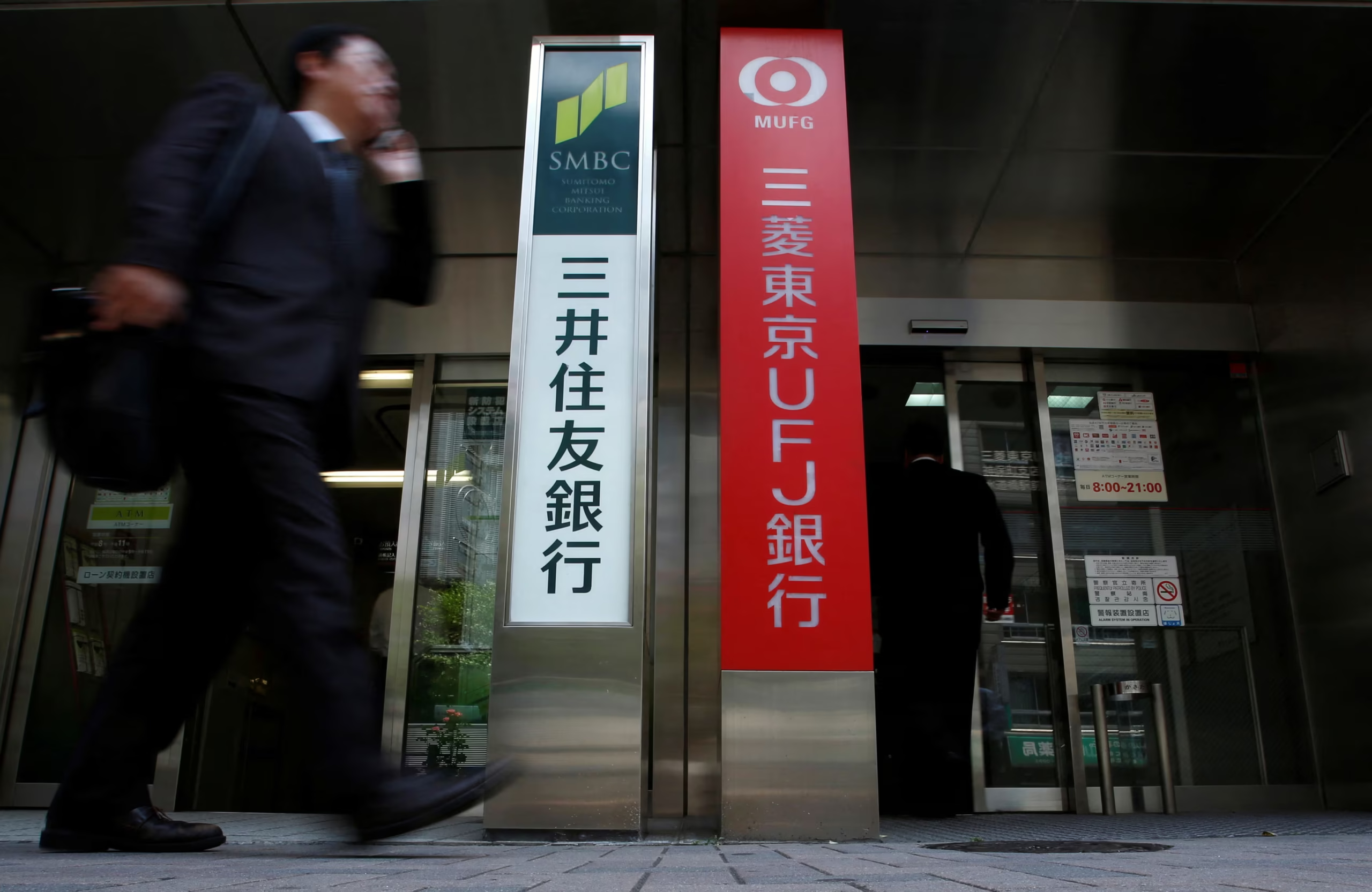
Japan’s two largest lenders — Mitsubishi UFJ Financial Group and Sumitomo Mitsui Financial Group — say they are preparing to rebuild their holdings of Japanese government bonds (JGBs). The move comes as rising interest rates are improving future return prospects, even though unrealised losses on existing bond portfolios have climbed sharply.
Table of Contents
ToggleA Decade-Long Trend Begins to Reverse
For much of the past decade, Japan’s megabanks steadily reduced their JGB exposure. Ultra-loose monetary policy from the Bank of Japan kept yields extremely low, making government bonds unattractive from a return standpoint.
That environment is now changing. A sharp rise in JGB yields since November — sparked by Prime Minister Sanae Takaichi’s proposed expansionary spending plans — initially knocked down bond prices and inflated paper losses. In recent weeks, however, the market has shown signs of stabilisation.
Demand at the last four government debt auctions has been solid, and yields on 30-year JGBs have retreated by 32 basis points from their January 20 peak of 3.88%.
“With long-term interest rates showing signs of peaking, we intend to cautiously rebuild our JGB position,” said Takayuki Hara, managing director and head of MUFG’s CFO office, during a media briefing.
Losses Persist, but Buying Will Be Gradual
MUFG, Japan’s largest lender, reported unrealised losses of about 200 billion yen ($1.3 billion) on its bond portfolio at the end of December, up sharply from 40 billion yen at the end of March. The bank said it reduced exposure to longer-dated bonds between September and December, a move that helped limit further valuation damage.
The math is simple: when yields rise, the market value of bonds purchased at lower rates falls — creating unrealised losses even if the bonds are held to maturity.
SMFG faces a similar situation. The bank said that while rising rates have led to valuation losses on yen-denominated bonds, it still plans to gradually add to its JGB holdings, depending on market conditions. Its unrealised losses on JGBs more than doubled to 98 billion yen in the nine months through December.
The more cautious tone extends across the sector. MUFG, SMFG and third-ranked Mizuho Financial Group have largely favoured short-duration bonds in recent years. At the end of December, Mizuho’s average remaining maturity for JGBs stood at just 1.8 years.
Earnings Outlook Brightens Despite Risks
Some investors remain sceptical that banks will rush into longer-duration bonds. Expectations of further BOJ rate hikes, along with concerns over Japan’s massive public debt, could keep yields under upward pressure.
With opinion polls pointing to a strong election showing for Takaichi, markets are also factoring in a higher likelihood of fiscal expansion — a scenario that could push bond yields even higher.
“I expect the JGB yield curve to keep rising, with the 10-year yield potentially reaching 2.5%,” said Toshinobu Chiba, a fund manager at Simplex Asset Management, adding that such levels could become an attractive entry point for bank buyers. The 10-year yield currently sits near 2.2%.
The BOJ raised interest rates for the first time in 17 years in March 2024 and has delivered three additional hikes since then, lifting its benchmark policy rate to 0.75%.
Those moves have already transformed bank profitability. Japan’s megabanks are forecasting record profits for the current financial year, while the Topix banking index has doubled since the March 2024 rate hike, far outperforming the broader market.
Looking further ahead, analysts say that higher yields on gradually expanding JGB portfolios could provide an additional earnings tailwind. Goldman Sachs analyst Makoto Kuroda recently upgraded profit forecasts for MUFG, SMFG and Mizuho for the 2028 financial year, citing higher interest rates, rising bond yields and a weaker yen.
Net profit estimates were raised by 20% for MUFG, 11% for SMFG and 21% for Mizuho — underscoring how a once-painful bond market shift may ultimately strengthen Japan’s biggest banks.
