
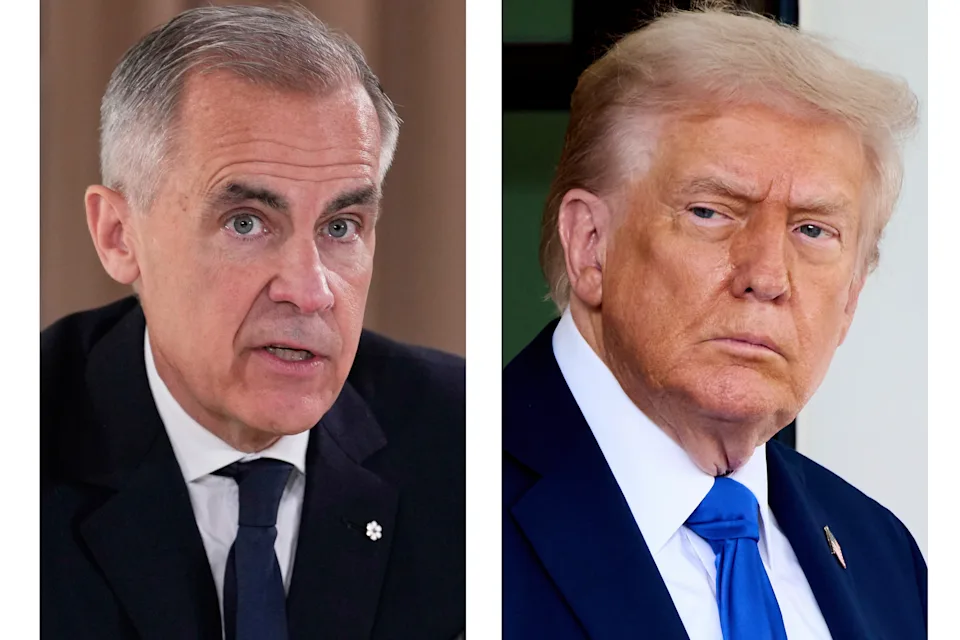
Former U.S. President Donald Trump has once again ignited tensions with America’s northern neighbor, warning that Canada could face severe economic consequences if it moves forward with closer trade relations with China. In a series of fiery posts on Truth Social dated January 24, Trump said he would slap sweeping tariffs on Canadian imports, escalating an already strained diplomatic exchange.
At the center of the controversy is what Trump described as a potential gateway for Chinese goods into the U.S. market. According to Trump, (Trump threatens to impose a 100% tariff on Canada over its trade deal with China) if Ottawa proceeds with any agreement that he believes could undermine American trade interests.
“Governor Carney” and the China Warning
In his post, Trump mocked Canadian Prime Minister Mark Carney by repeatedly referring to him as “Governor Carney,” reviving his long-standing rhetoric about Canada becoming the 51st state of the United States. Trump claimed that Canada would not be allowed to serve as a “drop-off port” for Chinese products bound for American consumers.
He went even further, warning that China would overwhelm Canada economically and culturally. Trump argued that a deal with Beijing would lead to the collapse of Canadian businesses and disrupt its social and economic stability. If such a deal were finalized, he said, the U.S. would respond immediately with a 100% tariff on all Canadian goods entering the American market.
Davos Speech Sparks Trump’s Fury
Trump’s remarks followed comments made by Carney earlier this week at the World Economic Forum in Davos, Switzerland. During his speech, Carney described the global economy as entering a period of rupture rather than gradual change, accusing major powers of weaponizing trade and economic integration.
Carney emphasized that countries like Canada must adapt and work together in this shifting environment, warning that nations excluded from global decision-making risk becoming casualties of larger geopolitical battles. He also reaffirmed Canada’s opposition to tariffs related to Greenland and expressed support for Denmark’s sovereignty over the Arctic territory.
Those comments appeared to strike a nerve with Trump.
“Canada Lives Because of the U.S.”
Trump quickly responded, insisting that Canada benefits disproportionately from its relationship with the United States. He claimed Canada should be thankful for American support and accused its leadership of taking the relationship for granted.
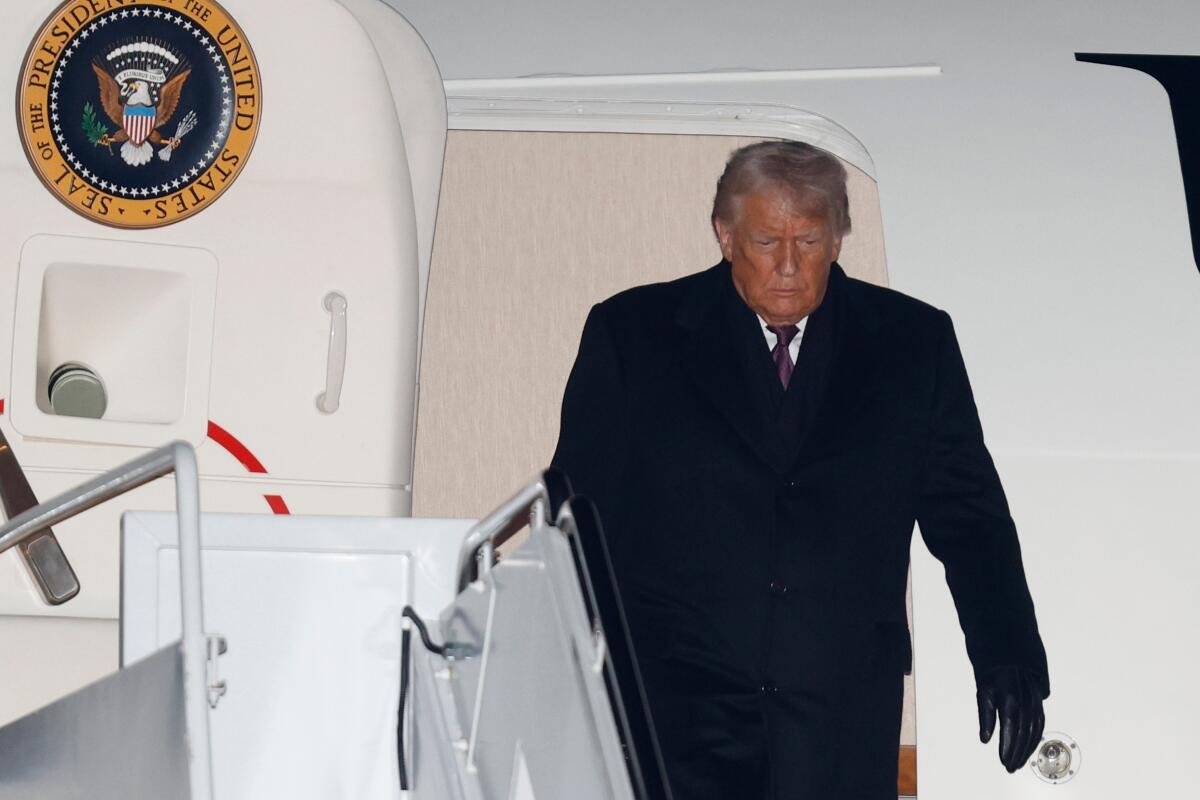
“Canada gets a lot of freebies from us,” Trump said in remarks on January 21, adding that the country’s economic survival depends heavily on the U.S.
Removal From Trump’s “Board of Peace”
The feud escalated further when Trump announced that Carney had been excluded from his so-called Board of Peace, a group initially formed to assist in rebuilding Gaza but later expanded to address other global conflicts.
In another Truth Social post on January 22, Trump said the invitation extended to Canada had been withdrawn, framing the board as one of the most prestigious leadership groups ever assembled.
Canada Pushes Back on Trade Claims
Canadian business leaders pushed back against Trump’s narrative. Matthew Holmes, Chief of Public Policy at the Canadian Chamber of Commerce, said Canada’s discussions with China are focused on domestic economic needs, not on redirecting goods into the U.S. market.
Holmes also noted that the United States itself is pursuing new trade engagements with China, pointing out that no economy can rely on a single trading partner indefinitely. He stressed that Canada’s outreach to countries like China, Indonesia, and the United Arab Emirates is not meant to replace its long-standing economic relationship with the United States.
Trade Uncertainty Ahead
Canada and the U.S. have yet to finalize a new bilateral trade deal, and the 2020 Canada-U.S.-Mexico Agreement is scheduled for review later this year. As trade negotiations and geopolitical tensions continue to evolve, Trump’s sharp rhetoric adds another layer of uncertainty to an already complex relationship.
Just hours after his initial post, Trump doubled down, declaring that China would never be allowed to “take over Canada,” insisting such an outcome would not happen “or even come close.”
