
President Donald Trump has never been shy about saying things that complicate life for congressional Republicans. But for many on Capitol Hill, his recent fixation on acquiring Greenland pushed that discomfort to a whole new level.
The unease was hard to miss after Trump repeatedly refused to rule out the use of military force to take control of the vast, resource-rich Arctic island. On Jan. 9, the president warned bluntly: “If we don’t do it the easy way, we’re going to do it the hard way.” That rhetoric immediately set off alarm bells among GOP lawmakers, who found themselves defending — or distancing themselves from — comments that risked antagonizing Denmark, a longtime NATO ally.
In the corridors between the House and Senate chambers, Republicans bristled at the idea of the United States threatening force against allied territory. Senate Minority Leader Mitch McConnell of Kentucky labeled the prospect of seizing Greenland — a move opposed by most Americans, according to polling — as an “especially catastrophic act of strategic self-harm to America.”
Others echoed that concern. Sen. Lisa Murkowski of Alaska stressed that Greenland should be treated as a partner, not a possession. Speaking alongside a bipartisan delegation visiting Copenhagen on Jan. 16, she said the trip was meant to reassure Danish officials unsettled by Trump’s aggressive tone.
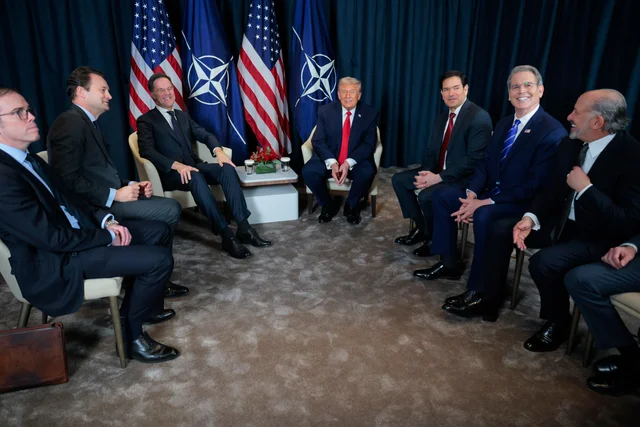
The standoff appeared to cool on Jan. 21, when Trump announced he had reached what he described as a “framework of a future deal” with NATO leadership. The development temporarily eased tensions, but it also underscored what may be one of the most challenging loyalty tests Republicans have faced during Trump’s second term — and raised the central question at the heart of the debate: Does the Trump–NATO Deal End Republicans’ Greenland Dilemma?
On one hand, the episode highlighted Trump’s continued influence within the party. Many Republicans praised his hard-nosed negotiating style and pointed to historical attempts by previous U.S. presidents to purchase Greenland as proof that the idea itself wasn’t entirely unprecedented.
On the other hand, the controversy revealed potential limits to that loyalty, especially when core foreign policy priorities like NATO are at stake. Trump has yet to provide details of the agreement he claims to have reached, leaving open the possibility that Republicans could face renewed scrutiny — and another political test — once the contours of the deal become clear.
Even without specifics, GOP lawmakers have already moved to repair frayed alliances. Rep. Mike Turner of Ohio acknowledged on CBS’s Face the Nation that Trump’s remarks had created real strain within NATO. “This is problematic,” he said, adding that ongoing discussions with allies would be necessary to clarify what the president’s comments might mean in practice.
Some Republicans were even less diplomatic. Rep. Don Bacon of Nebraska, speaking to the Omaha World-Herald, said bluntly that many in the party were furious. He described Trump’s approach to Greenland as “utter buffoonery,” capturing the frustration felt by lawmakers uneasy with escalating rhetoric toward an ally.
Republicans Breathe Easier After Trump Softens Tone
After weeks of veiled threats, Trump struck a noticeably different note on Jan. 21 while addressing world leaders at the World Economic Forum in Davos, Switzerland. He explicitly ruled out military action against Greenland, where the U.S. already operates a military base.
“I don’t have to use force. I don’t want to use force. I won’t use force,” Trump said, emphasizing that the United States was simply seeking greater access and cooperation. (During the same speech, he appeared to mix up Iceland and Greenland, though the White House later denied any confusion.)
Those assurances prompted a wave of relief among Republicans. Rep. Tom Cole of Oklahoma said he was glad the president clarified his position, stressing the importance of continued cooperation with Denmark and European allies.
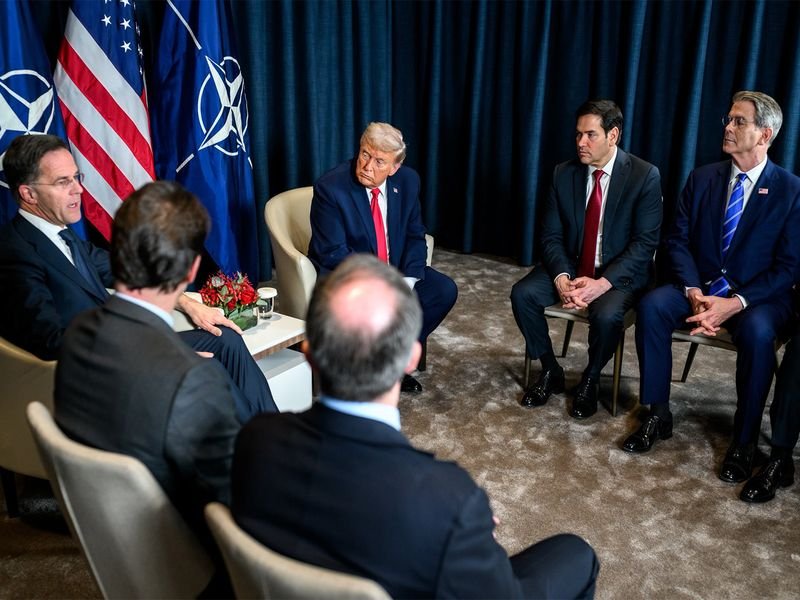
Soon after, Trump announced on social media that he and NATO Secretary General Mark Rutte had reached an agreement allowing the United States expanded military access to Greenland — without formally acquiring the territory. “We’re getting everything we want at no cost,” Trump claimed.
What, exactly, that means remains uncertain. A longstanding 1951 agreement already permits U.S. forces to build bases and operate freely in Greenland. Adding to the ambiguity, Greenland’s Prime Minister, Jens-Frederik Nielsen, said he was not initially involved in the talks and had no clear understanding of what the new deal entailed.
Despite the lack of clarity, many Republicans were quick to praise Trump’s deal-making instincts. Rep. Byron Donalds of Florida argued that critics focused too much on Trump’s rhetoric instead of trusting him to deliver results.
As for why it took weeks for the president to clearly rule out force against a NATO ally, Donalds offered a shrugging response: “Ask the president.”
For now, the immediate crisis has cooled. But until the details of Trump’s agreement are fully known, Republicans may find that the Greenland question — and the broader implications for NATO — is far from settled.
